The Unconference
A self-organizing event where the participants, not the organizers, decide what gets taught and learned.
“Unconferences sit at the core of the Founder Festival ethos: Getting the right groups of high-quality people together in IRL settings so they can learn faster, from each other.”
Founder Festival exists to engineer exactly those interactions: the right people, in the right room, learning from each other faster than any panel or keynote could deliver. The unconference is our preferred format to make it happen: no passive audience and no gatekept stage, just high-signal people teaching and learning precisely what matters most to them.
What is an “Unconference?”
You've probably been to a conference: an organized, structured learning event with speakers, panels, and sometimes workshops.
But have you ever been to an unconference, where you and the other participants decide what to teach each other and learn?
The unconference format is an unconventional take on a conference, and you'll probably love participating. Here's how it works.
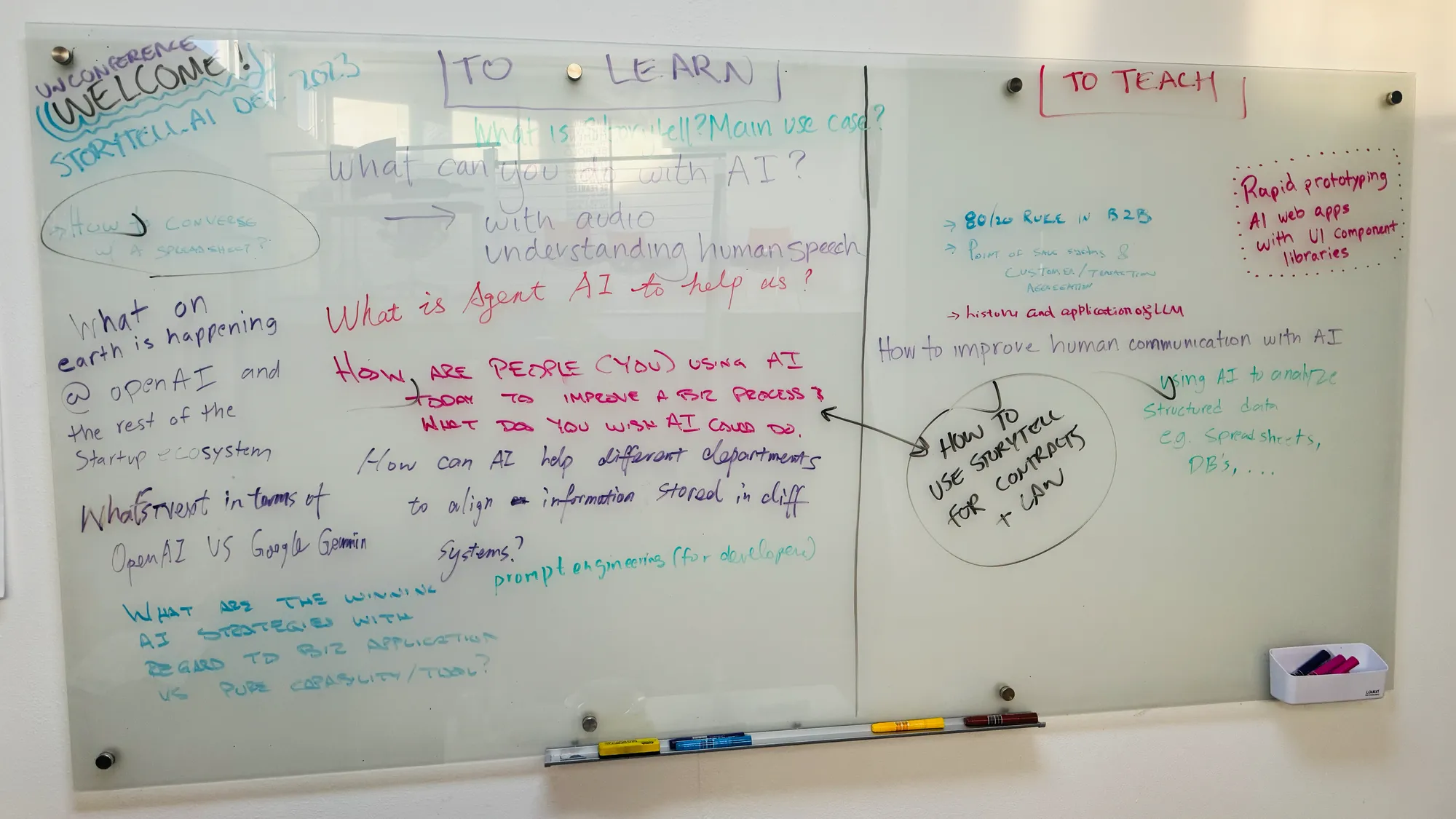
It all comes down to two columns
An unconference has exactly two questions on the board. Everything else flows from them:
To Learn
What's top-of-mind for you? What do you wish you understood better? Add it to the board and someone in the room probably knows the answer.
To Teach
What have you learned the hard way? Anyone can bring what they have to teach, from a hands-on lab to a quick, high-level intro.
Step 1: What do you want to teach? What do you want to learn?
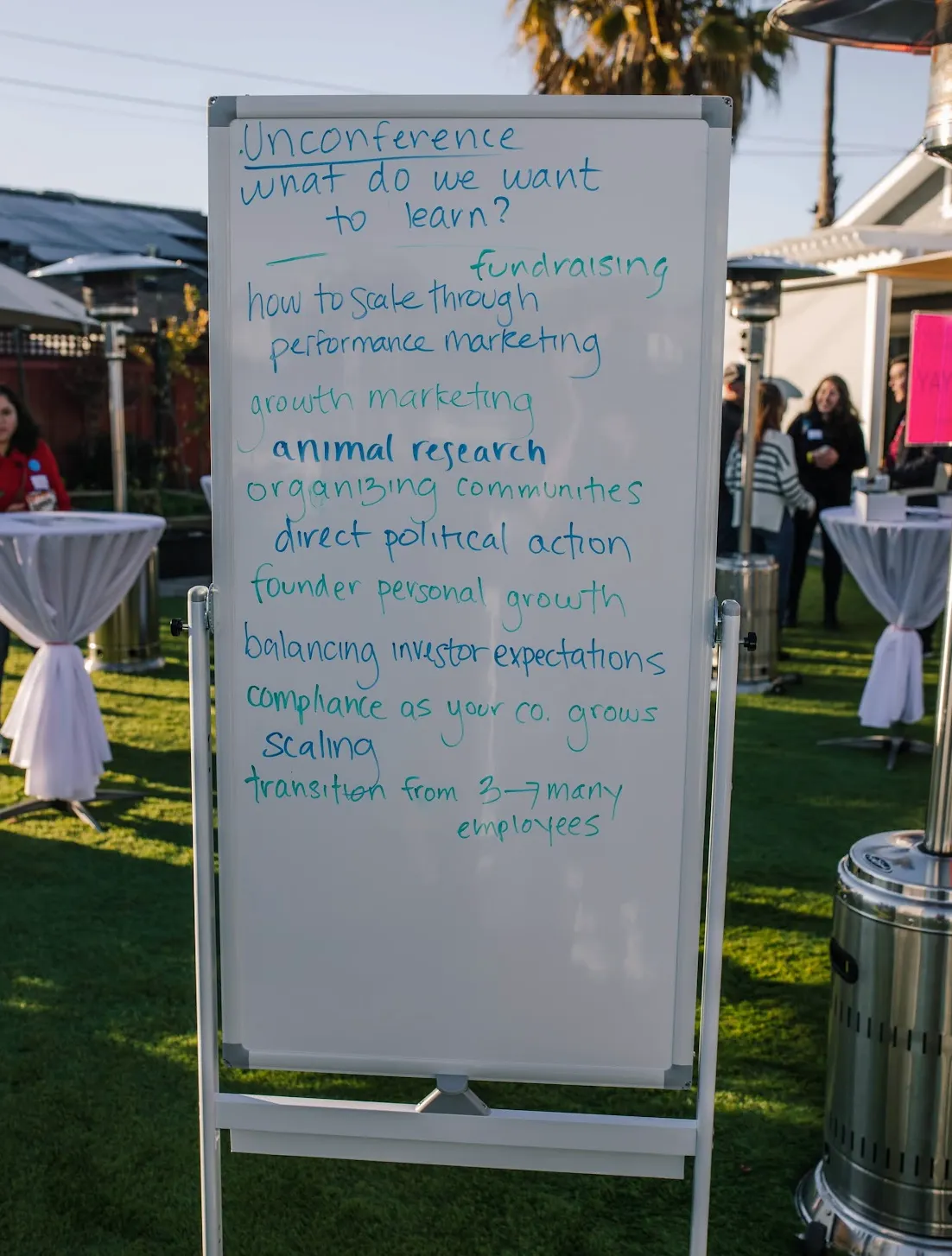
An unconference starts with a whiteboard. As participants arrive, they share ideas on what they'd like to teach, and what they'd like to learn. The whiteboard below is an example from a “FriYAY” Unconference held by FounderCulture. Participants share the topics that are top-of-mind for them.
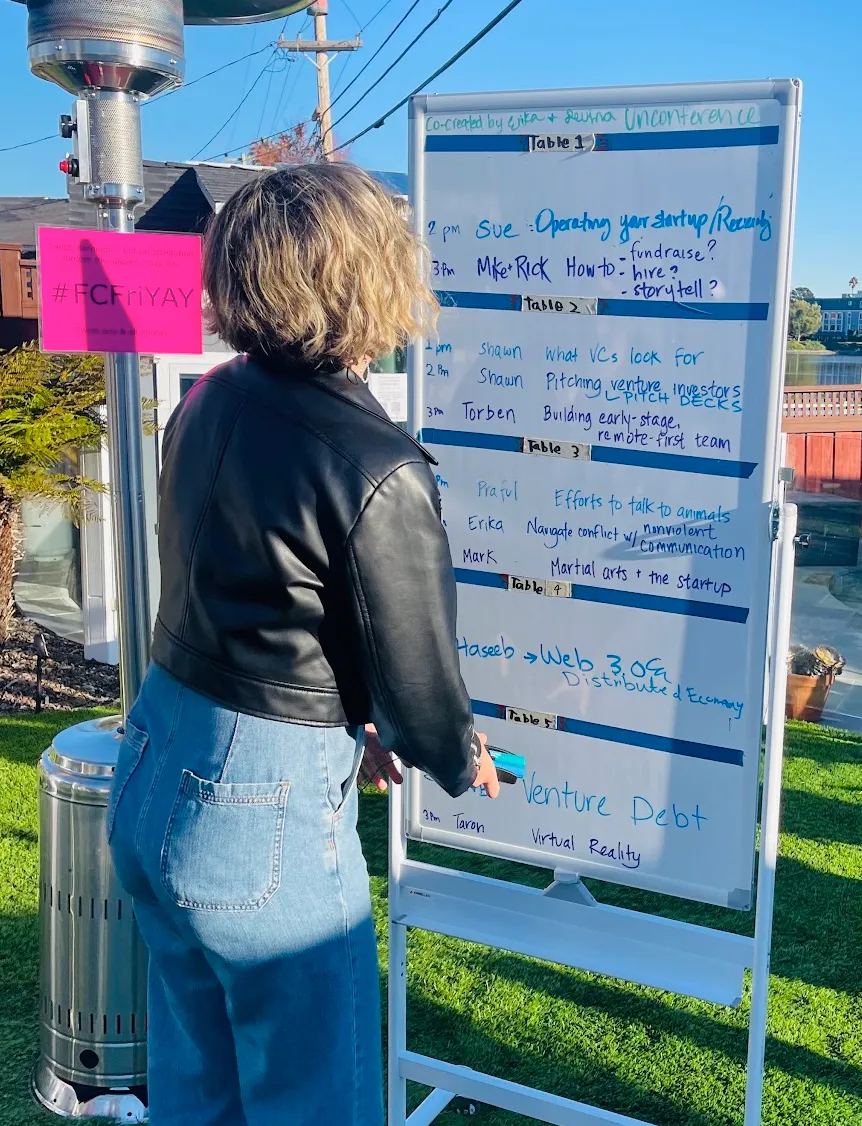
These topics are then added to schedule slots based on their popularity and how many people feel comfortable teaching them. Slots are typically blocked into 30-minute chunks, with some topics taking up 1, 2, or 3 slots (30–90 minutes long, based on the depth of the content). Hands-on “learning labs” usually run longer; high-level intros run shorter.
The schedule is fluid and dynamic. There's a set of tables, and a “track” is created for all the topics at that table, so like topics can flow into one another over the course of the day.
Step 2: Pick a table (or “track”) and start learning!
Forming the topic tracks and schedule blocks typically takes 30–60 minutes at the beginning of the unconference, and then everyone dives in. There's an “MC” who keeps track of time and makes sure the table topics correlate to the schedule on the whiteboard. It's dynamic: if attendees are really enjoying a topic or track, the MC can adjust the schedule to prioritize more of that type of learning as the day progresses.
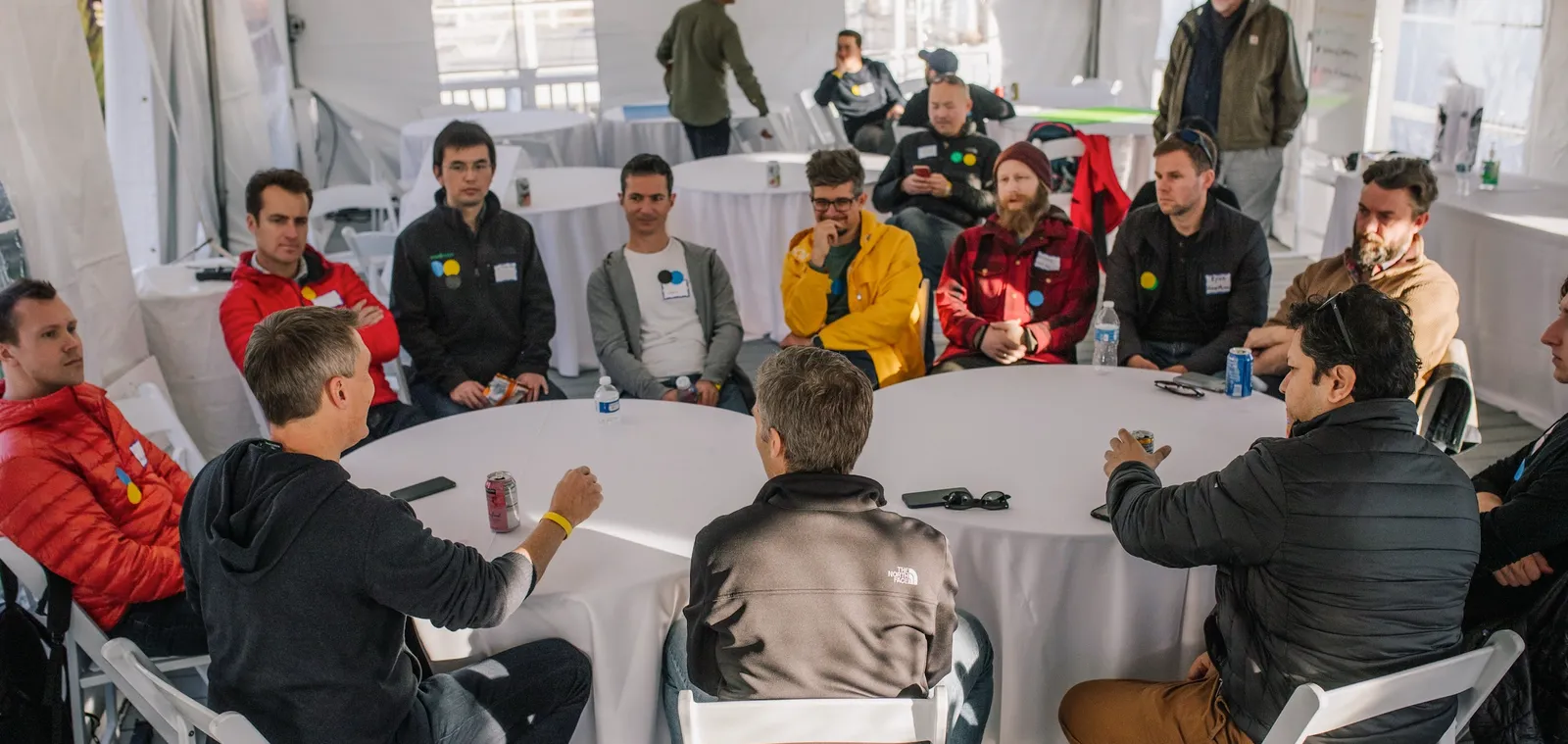
Some unconference tables are more popular than others, but don't mistake the size of the crowd for the quality of the experience. There's a beauty in small, intimate learning tables of just 2 or 3 people, where participants typically get to go much deeper.
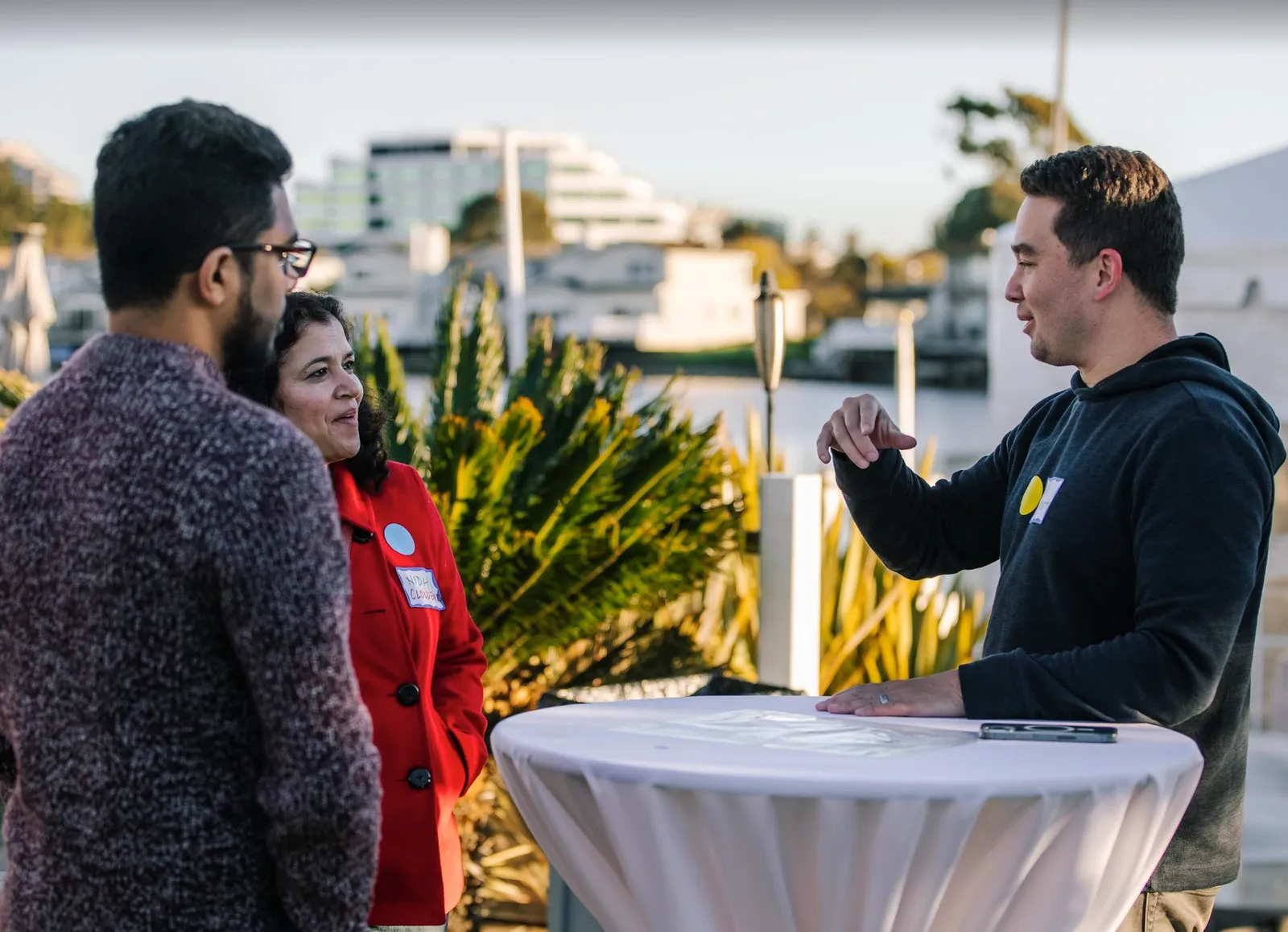
This is the beauty of the unconference format: a focused opportunity to learn about, and teach, the subject matter that's most compelling for you, in the way you want to experience it.
Why founders love it
In a recent conversation, a founder planning a dinner asked us what makes an unconference special, and whether it could stand in for a full, heavily-planned conference. Here's how we described it:
“It's a very organic, free-flowing event, because it lets people express their interest: what do they know, and what do they want to learn? You don't have to plan it out ahead of time. Someone says ‘I want to teach token-maxing from nine to nine-thirty,’ and anybody who wants to join just sits at the table and they talk.”
That founder's reaction says a lot about why the format travels so well: it's a genuine, low-overhead replacement for a full-blown conference. You don't need a season of programming or a booked slate of speakers. You need a room of interesting people, a whiteboard, and two columns.
The real magic is in the informal, unstructured time
Here's the part you can't schedule: an unconference is deeply informal, and that informality is exactly what makes it work. When no one is performing for a stage, people relax. Founders end up huddled around a laptop, laughing at the check-in desk, sprawled across couches, or sitting on the floor petting the house dog. It's in those unguarded moments that the real conversations happen. The format lowers everyone's guard, and lower guards mean tighter connections and a level of vulnerability you almost never get at a traditional conference.
The proof is in how long it lingers. Weeks after our June 2 Summer Solstice Founder + Investor Day, founders are still talking about the unconference we ran that afternoon. A great structured event is forgotten by the drive home; the informal, self-directed ones stay with people for months.
Founders and investors huddle around a laptop, chess board on the table. -DROdio
A few unguarded moments from the June 2 unconference. See more from the event →